Sleeping on It
Big ideas are meant to be gotten in and out of fast, like cold water. A short essay, even an aphorism, is just the right amount, when possible. The writing of long essays put me in a tizzy. I become confused and bog down. Am I even doing this right? Apparently not. Whatever hot-take had made my mind turn sooner or later cools off in the writing of a long essay and then I’m confused and depressed; like when I expect the wood stove to be hot, and find that it is cold to the touch. While this moment of despondency is real and frustrating, and I really can’t see any solutions or avenues of approach, I also know, from experience, that this bewildering stuckness is temporary, just a part of the writing process. Usually, all I need to do is to sleep on it.
Sleeping on it is probably one of the more valuable techniques that I know of for writing or any kind of thought-labor. If in the afternoon my thoughts were jammed up and recalcitrant, claustrophobic and neurotic, the next morning, after a night of sleep, I may very well find them to be mobile, lucid and expansive. The solution arrives unbidden, like a cat that had been missing but is now calmly slinking upon the back of the couch. I think part of this technique lies in surrendering mastery; knowing that it is not I who am necessarily doing the thinking around here. It’s like Freud’s story of Itzig the Sunday rider: Itzig was leaving on his horse. “Itzig! Where are you going?” “Do I know? Ask the horse.”
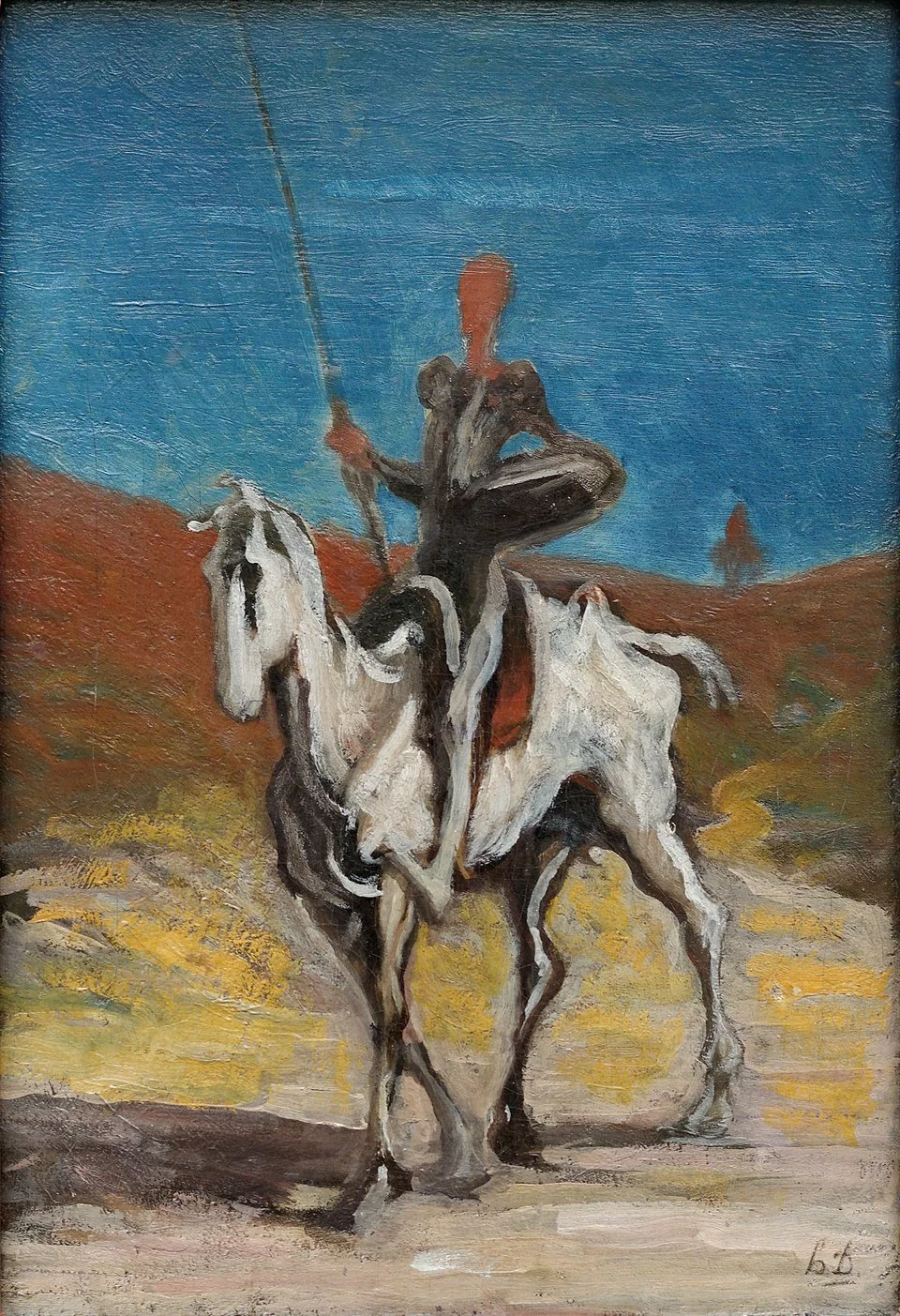
Don Quixote, 1868, Honore Daumier
Sometimes I need multiple nights of sleep. My recent essay on Oceanic Feeling, for example, I wrote over the course of three days, but then I still found myself unsatisfied with it, even after I posted it, and I was still editing it last week. I probably need a month of sleeps for that one. I’ve heard that you can rehearse your problem in your mind as you go to sleep but I think that just sleeping is alone enough to untie whatever had been in knots and get the energy moving again. It’s like sleep is a kind of peristalsis of mental stuff; the occult and involuntary movement of psychical material.
Some locate this power in hypnagogia itself—that hallucinatory phase prior to sleep where the waking mind melts into the currents of dream—as in Kafka’s insomniac method, or when Salvador Dali held the large key to his Paris apartment above a dinner plate while sitting in a chair and when he would go to sleep the loud clatter of the key falling on the dinner plate would wake him up and he would leap to the canvas and paint whatever visions he had seen.
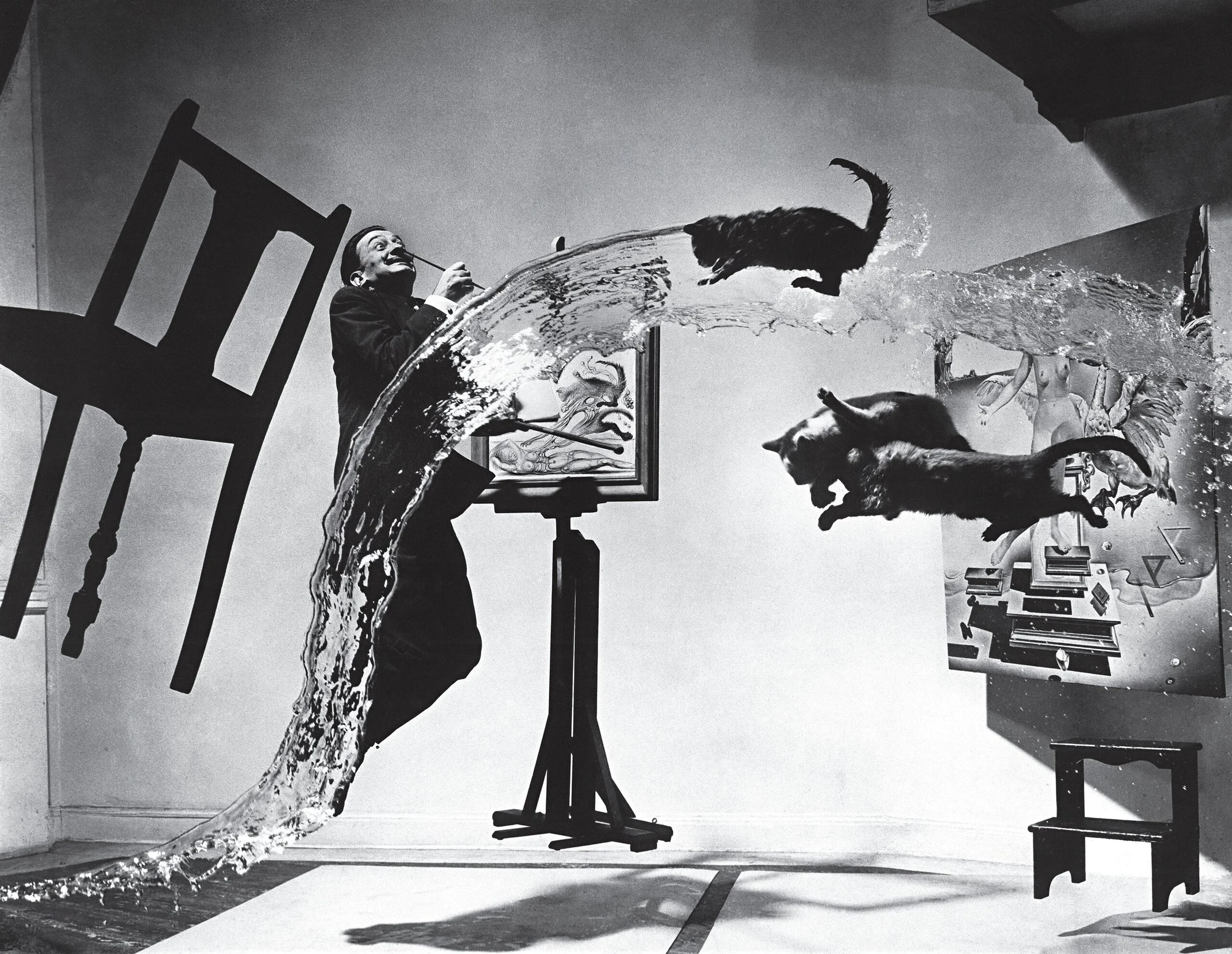
Dali Automicus, 1948, Salvador Dali, Phillipe Halsman
A strange phenomena in my own creative process is that if I am asked to make a speech, or give a public lecture, I am clueless about what I will talk about all the way up to the day before the lecture I am supposed to give; I then begin to panic because I have not done anything to prepare. In the morning the thing that I am supposed to say will come to me as in a revelation, fully formed as if it had already been written. I don’t understand how that works except that something in me is doing the work. But what is it?
Obviously one has to be there to catch it; that is, it is not for nothing that I sit at my keyboard day after day, no matter how blocked or stupid I might then be feeling. In the last instance it is style that is the most difficult and elusive problem of writing and one that does not just appear over night. Often I will return to some essay I solved fast asleep in the dead of night a year ago and reread it to find that its style is so honky and cringe. Oh my god, I think, wincing, did I write this? Well, somebody did, that’s for sure.
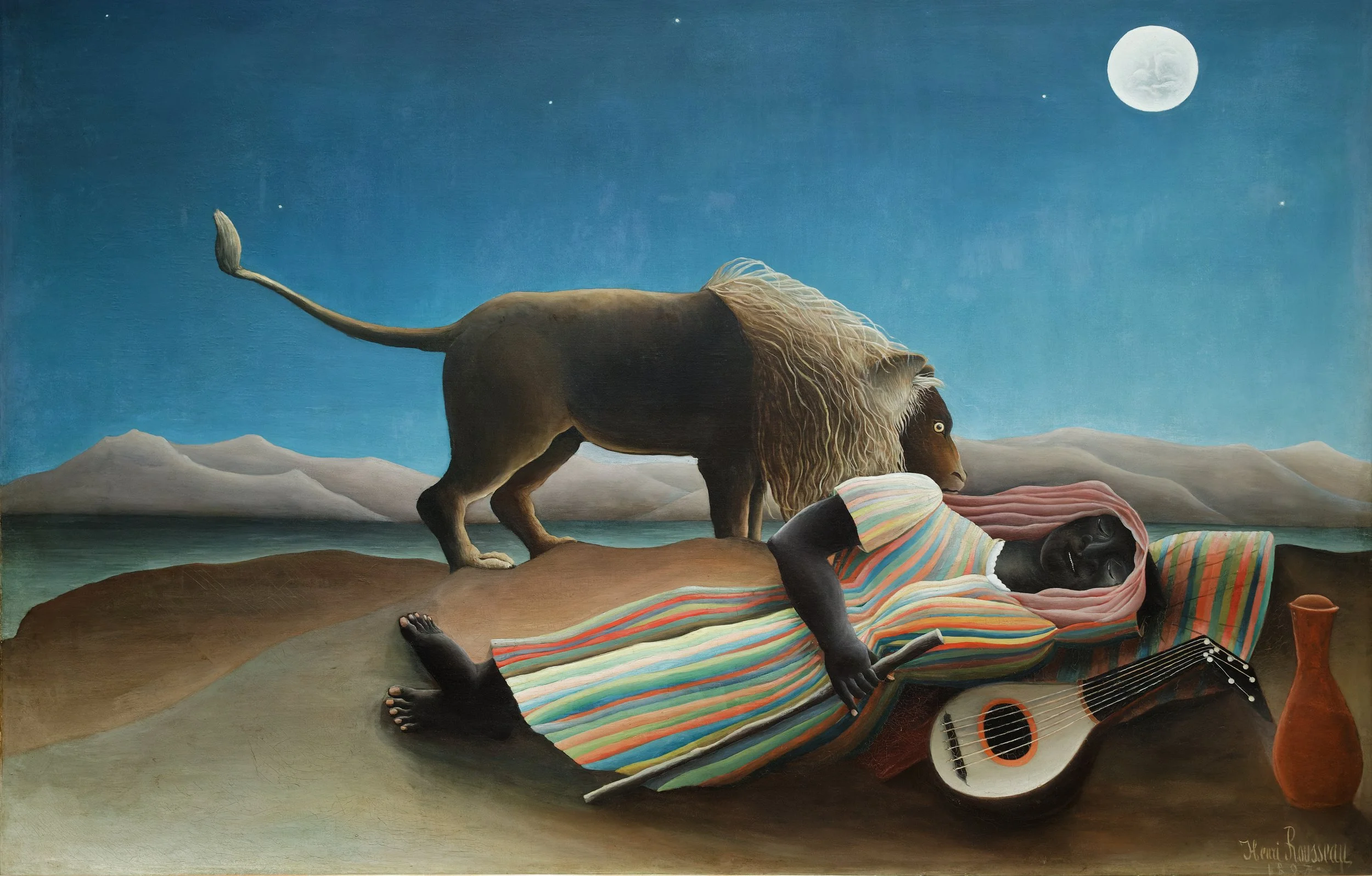
La Bohemienne Endormie, 1897, Henry Rousseau