Adélaide Labille-Guiard
Adélaide Labille-Guiard (1749-1803) was one of those most rare persons in the 18th century: a famous artist who was also a woman. She survived the reign of terror and was the first woman artist to be allowed studio space at the Louvre. Her paintings are risque (for the time period) and they offer sly hints of the floating world of female society, hidden behind closed doors.

Self-Portrait with Two Pupils, Marie Gabrielle Capet (1761–1818) and Marie Marguerite Carraux de Rosemond (1765–1788), 1785
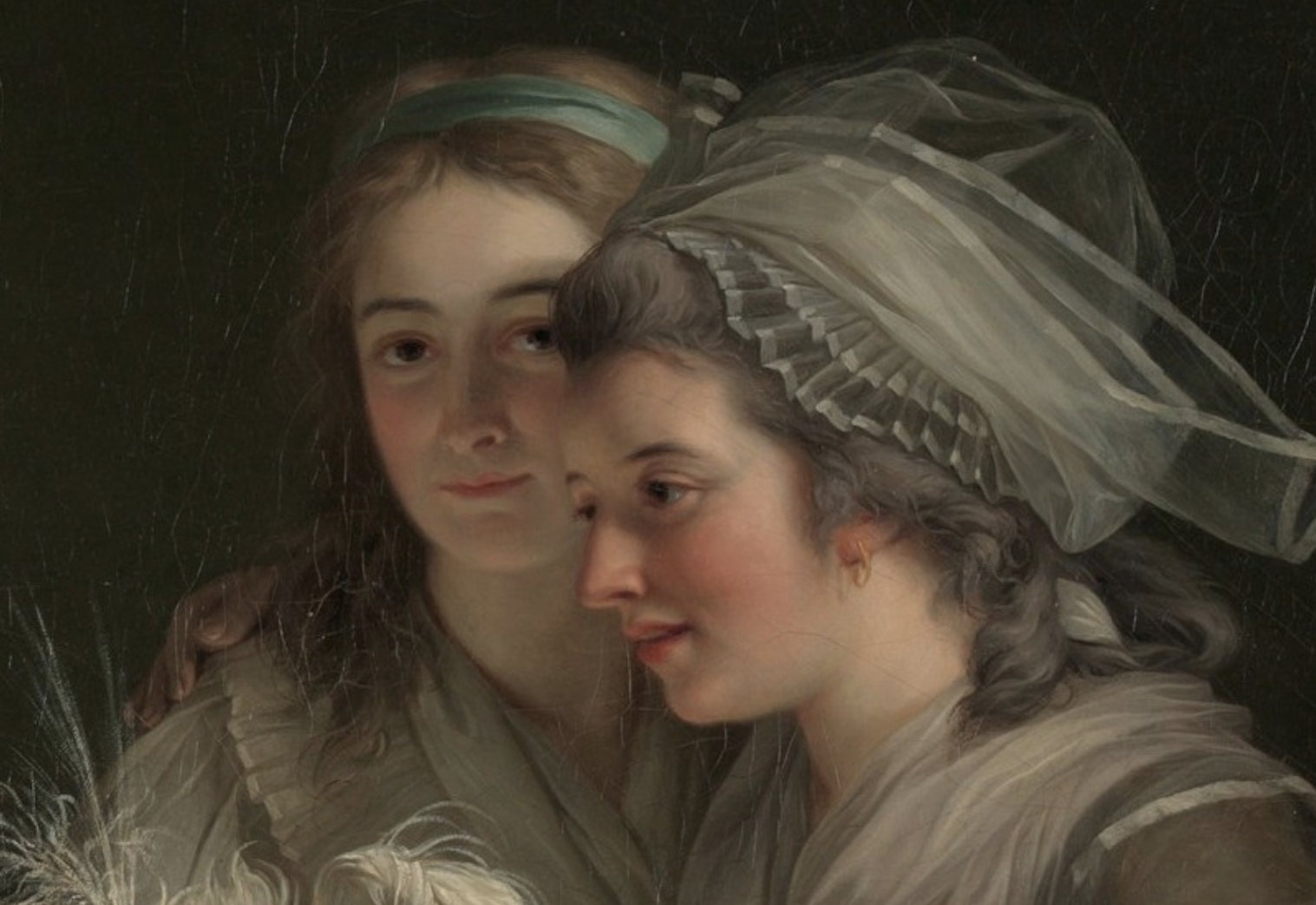
detail of Self Portrait with Two Pupils. The girl on the right appears to be looking in delight, at the same painting that we are looking at.
I feel as if I know these women. They possess a familiarity that is at once timeless and ephemeral. A mystery that is both revealing and intimate, as if we, the viewer in the distant future, were made privy to a long kept secret but that finally must remain enigmatic and interior; the secret that can’t be told.
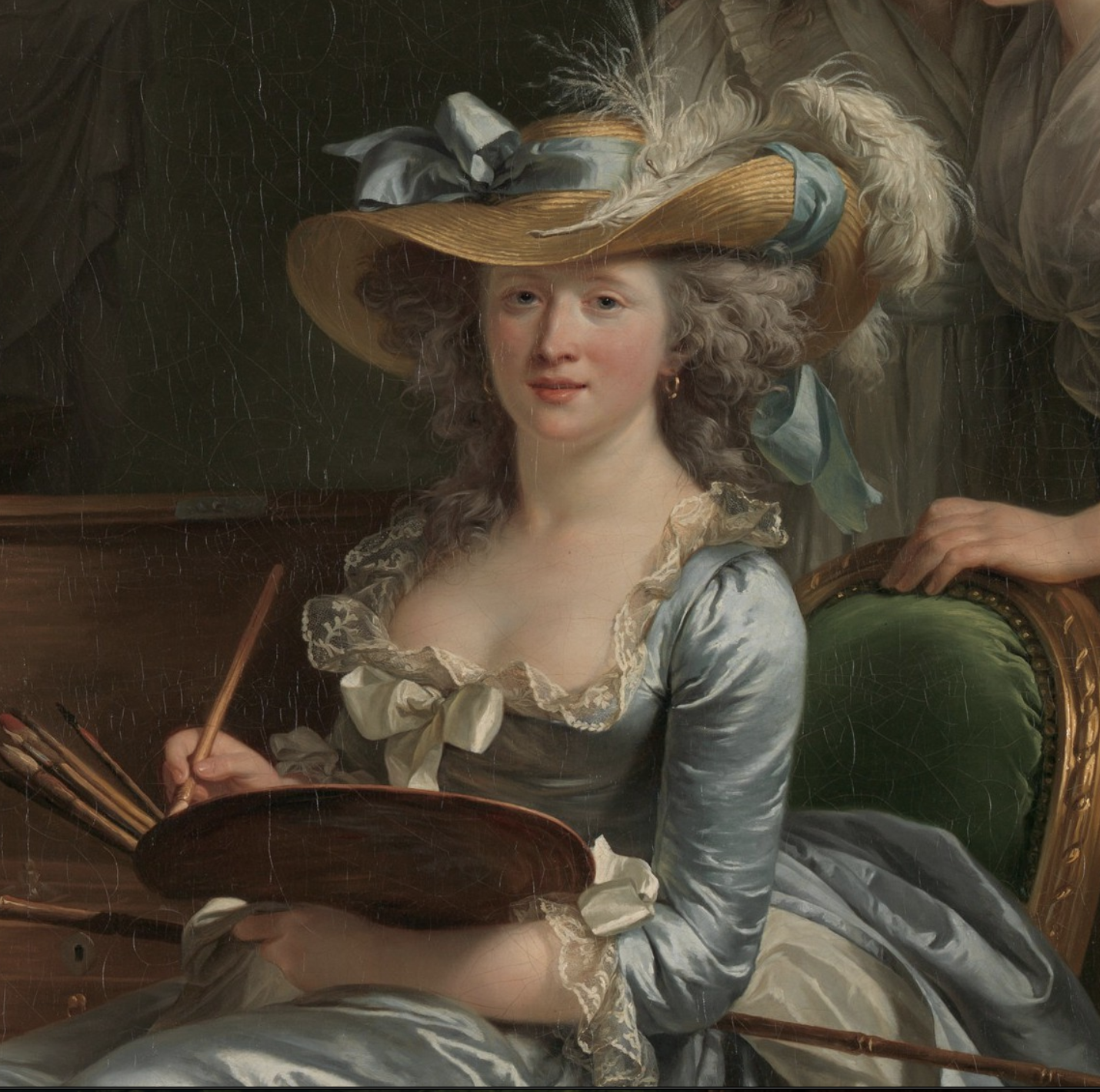
Self portrait of Adélaide.
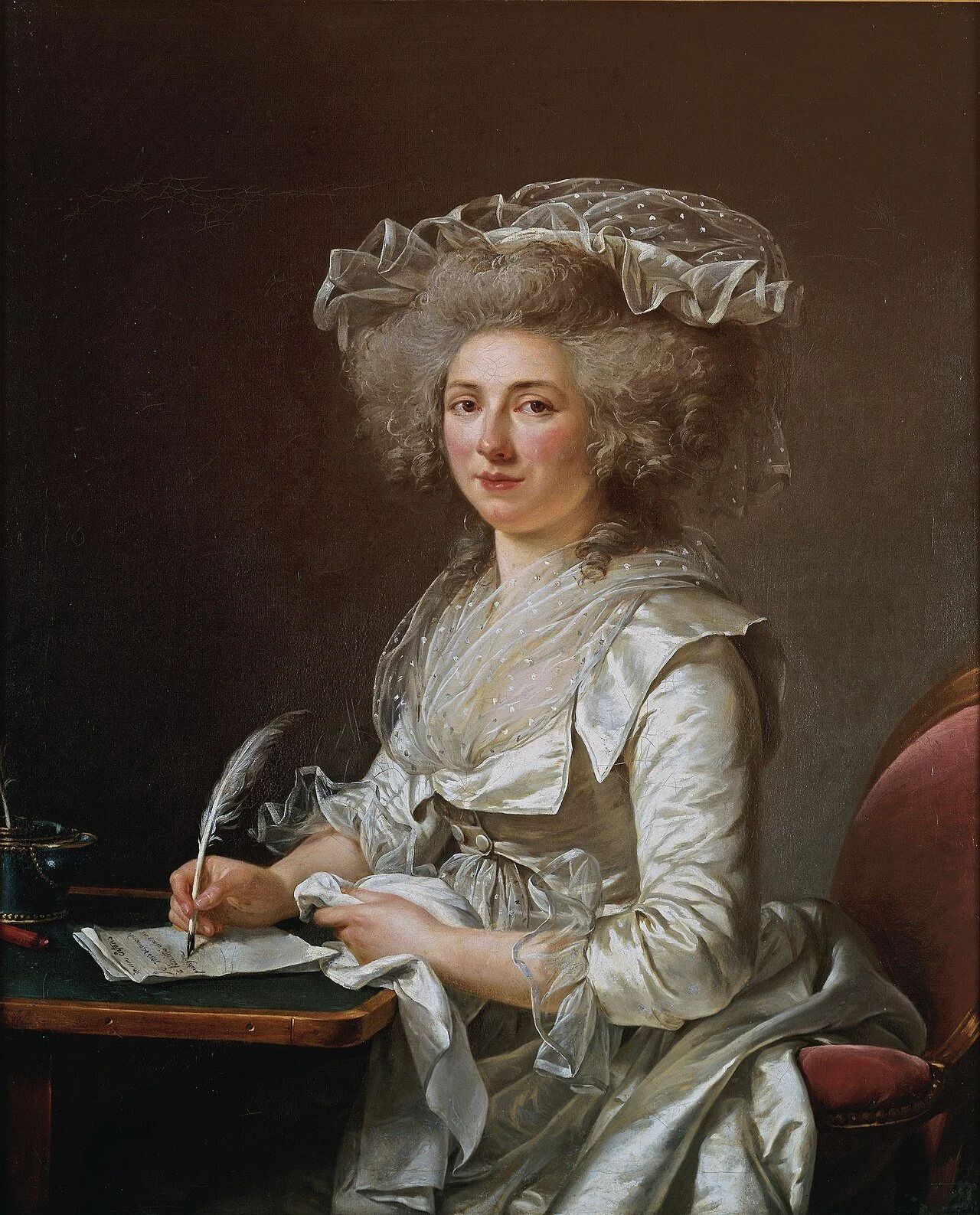
Portrait of a Woman, 1787
The folds of fabric here are sumptuous and tactile to the point of photo-realism (way before there were any photos) and they remind me of The Doors of Perception (1954), when Aldous Huxley, deep in his mescaline trance, becomes mesmerized by fabric and the representations of fabric in art history, of which Adélaide’s art is a supreme example; here it is as if the fabric itself were erotogenic.
Though Adelaide was a portraitist for the royal court of Louis XVI she survived the Reign of Terror. It has been speculated that she did so because she anticipated revolution and appealed to the revolutionaries by painting a portrait of Jacobin radical Maximillion Robespierre. Though the portrait no longer exists, a copy was made by another artist, Pierre-Roch Vigneron.
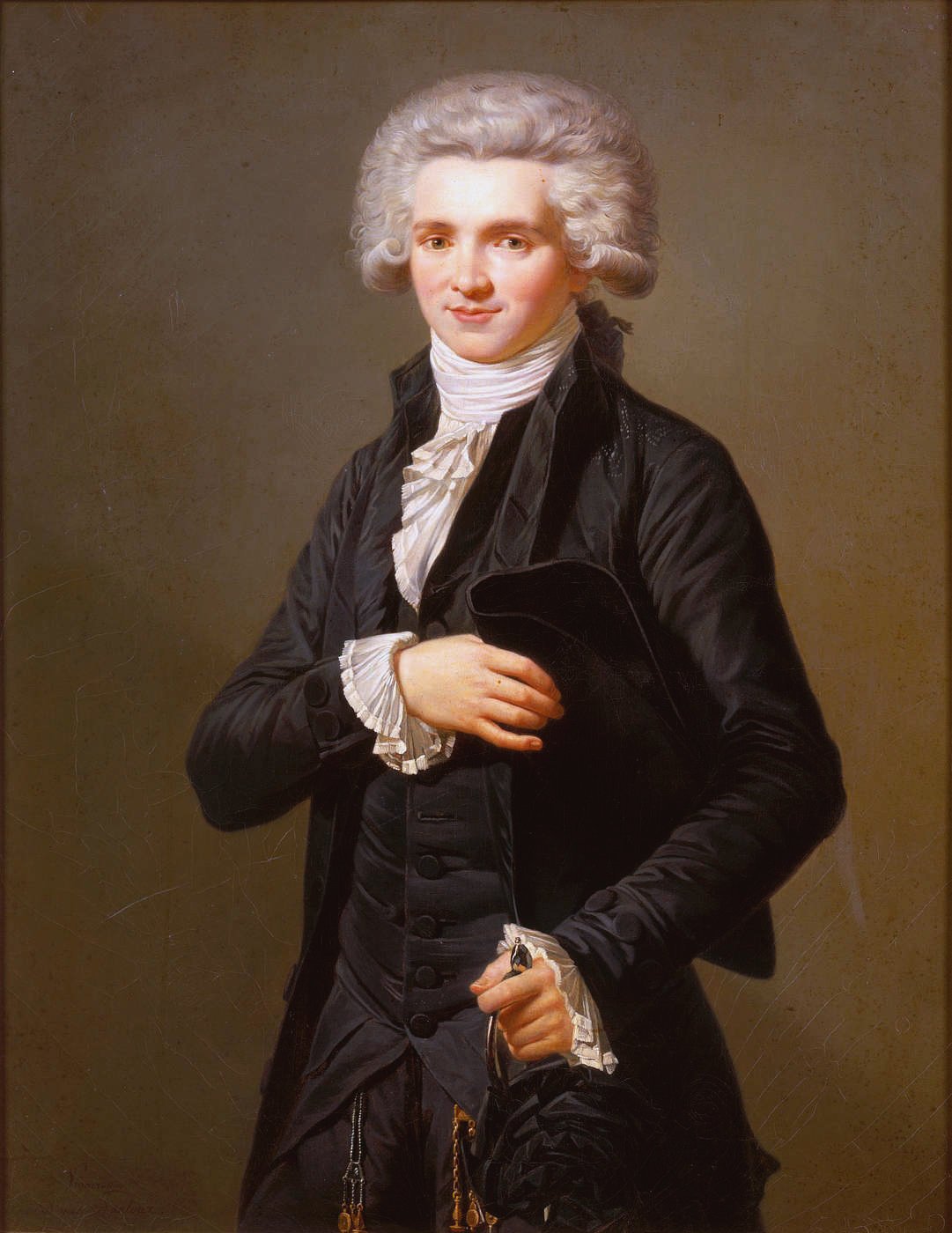
Maximillion Robespierre, 1790, Pierre-Roch Vigneron based on a copy of the original by Adelaide Labille-Guiard