Gnosis and Diagnosis: Knowledge that Changes Your Life
Many of my patients had at one point been given a diagnosis of ADHD. Some treat this diagnosis as if it were an accomplishment, even as a kind of conversion experience; whereas life before diagnosis was chaotic and confusing, full of emotional turmoil, life after diagnosis is explicable and known, bounded by the identity of the diagnosis, plus now with the steady drip of pharma. The diagnosis organizes their world in a way that is highly useful, if not downright revelatory; the diagnosis is an epiphany and a container. I would hazard the guess that half of this epiphany is due to the prescription of a stimulant.

The recent popular term neurodivergent is regularly used as a blanket diagnosis covering ADHD, PTSD, anxiety disorder and autism spectrum. Some members of this neurodivergent group refer to themselves as spicybrains. This is a term of endearment. In the popular imagination spicybrains get things done. Here we can see how even a playful diagnosis can resolve behavior, that once may have been termed a disability or a disorder, into a special-ability and a gift. The child psychologist Dr. Becky follows this trend of non-pathological diagnosis with her notion of the deeply feeling kid.
(For the parapsychology version of this trend, see for example the engaging and highly weird podcast The Telepathy Tapes regarding the telepathic powers of autistic children.)
But the diagnosis likewise functions as a defense. When confronted by their own inscrutable behavior, the patient can relay blame to the diagnosis. “Oh don’t mind me, that’s just my divergent neurons.” So the patient remains defended against intolerable feelings. Much of the diagnostic container, as we know it today, is built from the cognitive behavioral idea that one’s abnormal behavior is determined in advance by abnormal neurology—all those spicy neurons. The symptoms do not have an emotional cause, but a chemical one, perhaps even hereditary: “oh that’s not me, that’s just my genetic destiny.” Naturally, if it has a chemical cause, then it must have a chemical fix—for which big-pharma can charge a premium.
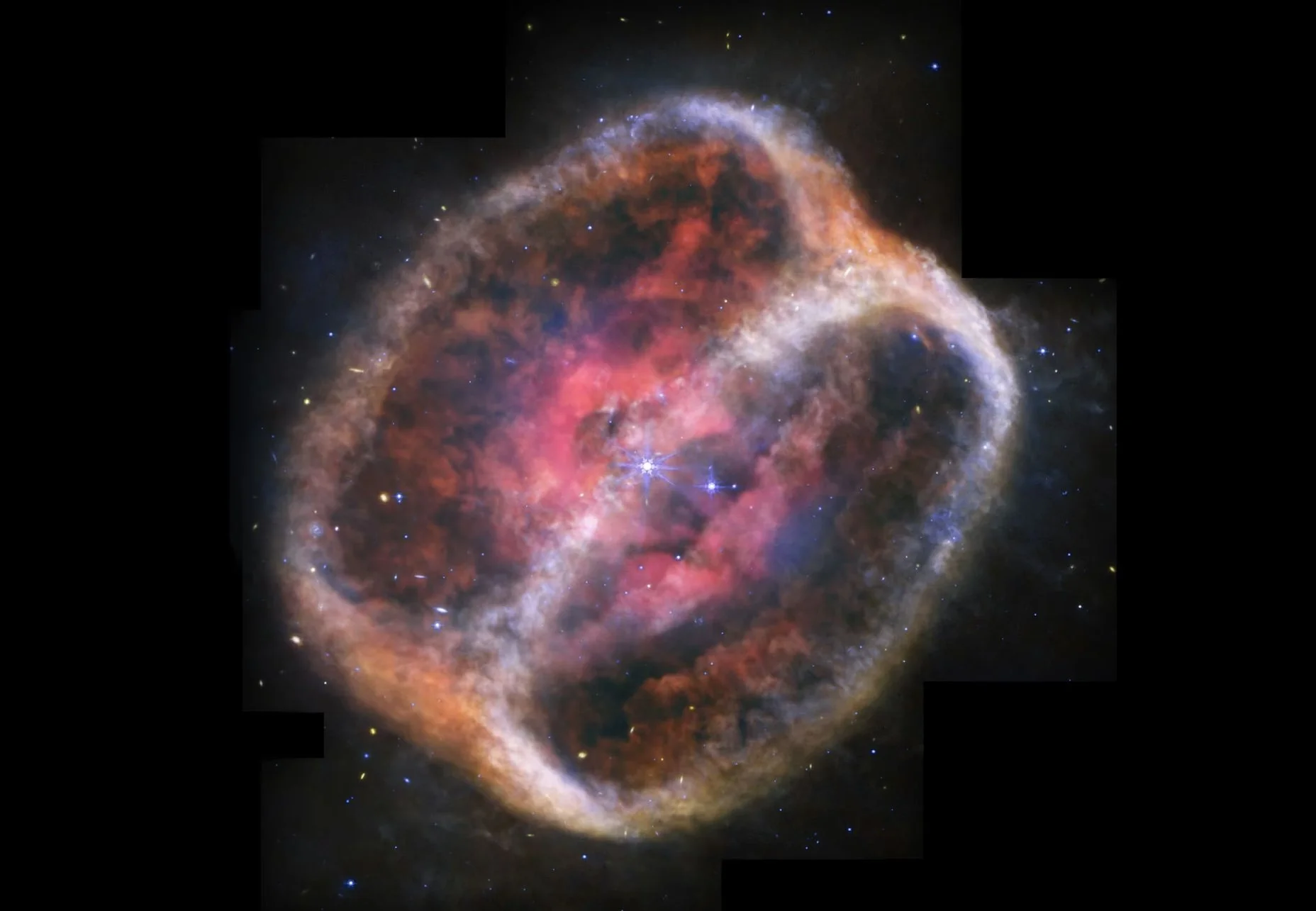
galaxy brains
On the one hand, we can see how the power of diagnosis to contain emotional distress is without question. And on the other hand the desire for diagnosis is itself symptomatic of our mania for knowledge. The diagnosis is the tool-end of a hegemonic system of discourse complete with a metaphysics, symptomatology, insurance codes, membership and belonging, treatment regimens and pharmaceutical grift.
Following the position of my school I remain indifferent to diagnosis; I neither confirm nor deny my patient’s various diagnoses; they make points of departure for discussion. As I’ve written before on this channel, I think that the DSM has more in common with a Dungeon Master’s guide to Dungeons and Dragons, than to any kind of hard-science manual. In other words: the diagnosis of mental phenomena always includes a certain amount of fantasy. And this is no less true than for that of the macro diagnoses of which you may be familiar: the separation from nature, Buddhist insufficiency, Christian depravity, Lacan’s lack and so on. Even the premise of an unconscious can function as imaginal diagnosis.
I am struck just now by how the word Diagnosis has the word Gnosis tucked away secretly inside of it. I say secretly because I only noticed this right now while writing this essay. Gnosis is knowledge, but it is also an ancient and esoteric means of transcending to higher worlds. If I were to offer a working definition of gnosis, in its gnostic (and diagnostic) register, it would be: knowledge that changes your life; knowledge that allows you to wake-up, to history, to environment, to spirit. According to the gnostic imagination, gnosis is the triumph of mind over matter; reality is determined by knowledge and not, as materialist science would have it, the other way around. From the metaphysical perspective this position is highly debatable; viewed psychologically, it can hardly be doubted.
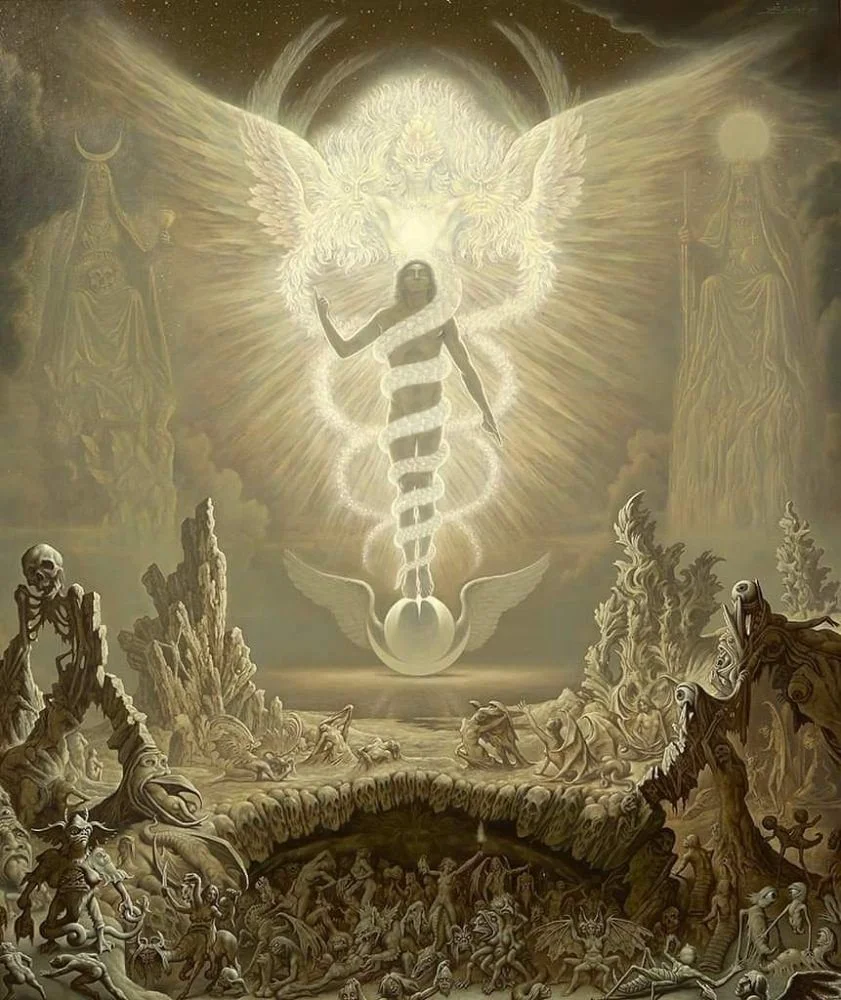
The Vision of Hermes Trismegistus, 1972, Johfra Bosschart