Sympathy for the Abyss
No moment in human life is more mysterious nor more profound than that of the newborn infant. How strange that even though we have all been there it is as remote as the dark side of the moon.
Just as the cosmologist imagines the dawn of time, psychoanalysts tend to direct a great deal of imagination towards the extraordinary moment of infancy. One common theme I’ve noticed among these many accounts is that of space, whether that is the boundless space of oceanic feeling, where the infant’s self includes everything; or, its direct inverse, the unthinkable emptiness of Lacan’s strange concept The Thing, in which preverbal experience is conceived as an alien void from which proceeds the entire mythological universe (much like the Ein Sof god of Kabbalah); or see Esther Bick’s descriptions of the newborn infant, feeling as if they had been shot from their space ship (the womb) into empty space and so may be consumed with terrors of spilling out, or of falling forever.
If we imagine the ego as a kind of leaky container (some egos are more leaky than others) by which one projects necessary limits onto the universe—the ground itself—and if the infant, in a very literal sense, has no ego, nor any notion of “ground,” then the greater part of infantile helplessness is being suspended in an abyss. It is as if the infant had been born into sunyata, that formless emptiness that the Mahayana Buddhist attempts to recover in their practice. That this emptiness happens to be the nursery matters little to the infant, for whom, like a quantum particle, all limits are functionally non-existent.
Say what you will about the term depth psychology its operative metaphor implies that the psyche is a chasm. The scaffolds of the symbolic reach down as far as you are willing to climb into endless space. How vertiginous it is to realize that this chasm is not only inside of you, but outside as well, and that occasionally snaps to actual chasms—misty mountain chasms, sea chasms, and finally the chasm of the universe.
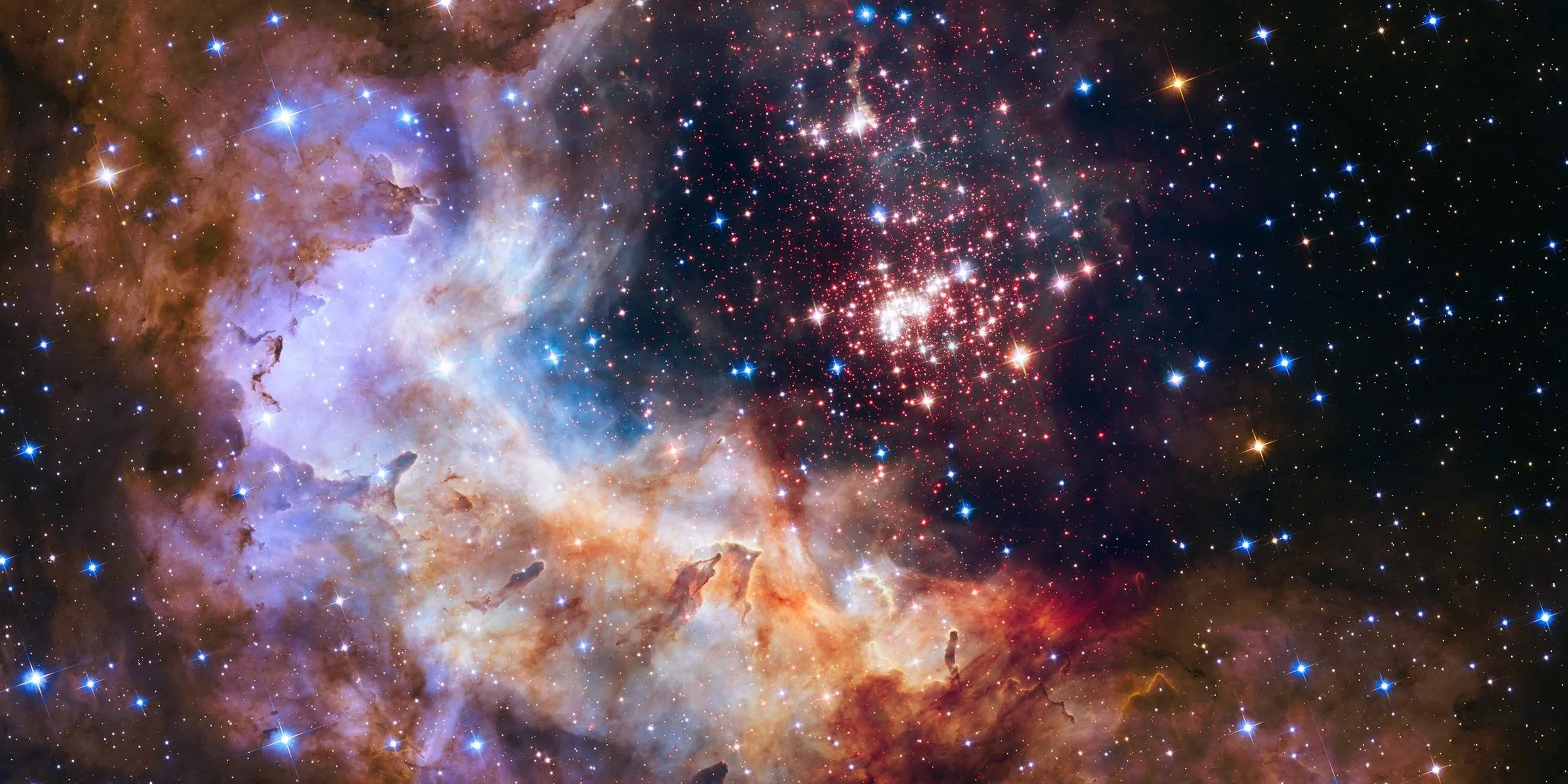
And no wonder the infant is terrified of falling forever! The infant’s environment, in this moment of becoming, has no discernable limits. I’ve met certain schizophrenics with a holy terror of the floor falling out from under them; a totally irrational fear of falling into the ground. It is precisely this fear of falling that Esther Bick has likewise noted in her patients and that she then reads retroactively into the primordial psyche of the newborn. The infant and the schizophrenic may be on to something: is not solid ground all too contingent and precarious? Liable to vanish in an instant?
In regards to infants, we can see how the ancient practice of swaddling provides the infant with a tightly confined limit by contiguous pressure and the constriction of movement; the swaddling bands are the child’s functional ego—like an auxiliary womb. For it is mother finally who, painstakingly and with a great deal of love and affection, puts the ground under baby—and so no wonder that we so often call the earth mother; Pachamama, as they say in the Amazon rain-forest, our little patch of earth, falling through the cosmos.