Trance Vortices in the Economic Model of Mind
Trance phenomena may be plugged right into the economic model of mind as conceived by Freud, and greatly elaborated by Laplanche—almost as if it were a model of trance? Following this lead, let us propose a spectrum of trance where on the one end there is the high-frequency trance of sober everyday life, of bound energy and egoic unity and that seems like no trance at all; and on the other end there is the low-frequency trance that is composed of unbound, free energy and relates to the non-ordinary ecstatic trance-state, properly speaking. Per Laplanche, this is not a linear spectrum but rather a dynamic loop that we may visualize as an atmospheric vortex in the manner of a hurricane or typhoon with competing forces of high and low pressure systems, or high and low states of tension. This does the trick of tossing the old notion of linear progress, from primitive to mature, or savagery to civilization, and turns history, if not human development, into a collection of trance whirlpools or vortices—paroxysms to use Baudrillard’s term. From the standpoint of the trance spectrum the Venn diagram made by oceanic feeling, the death drive and the nirvana principle tightens into a knot. It is not for nothing that Freud named the nirvana principle—the economic tendency to zero—after the most famous trance-state of all time. Is not the death drive the very current of ecstasy?
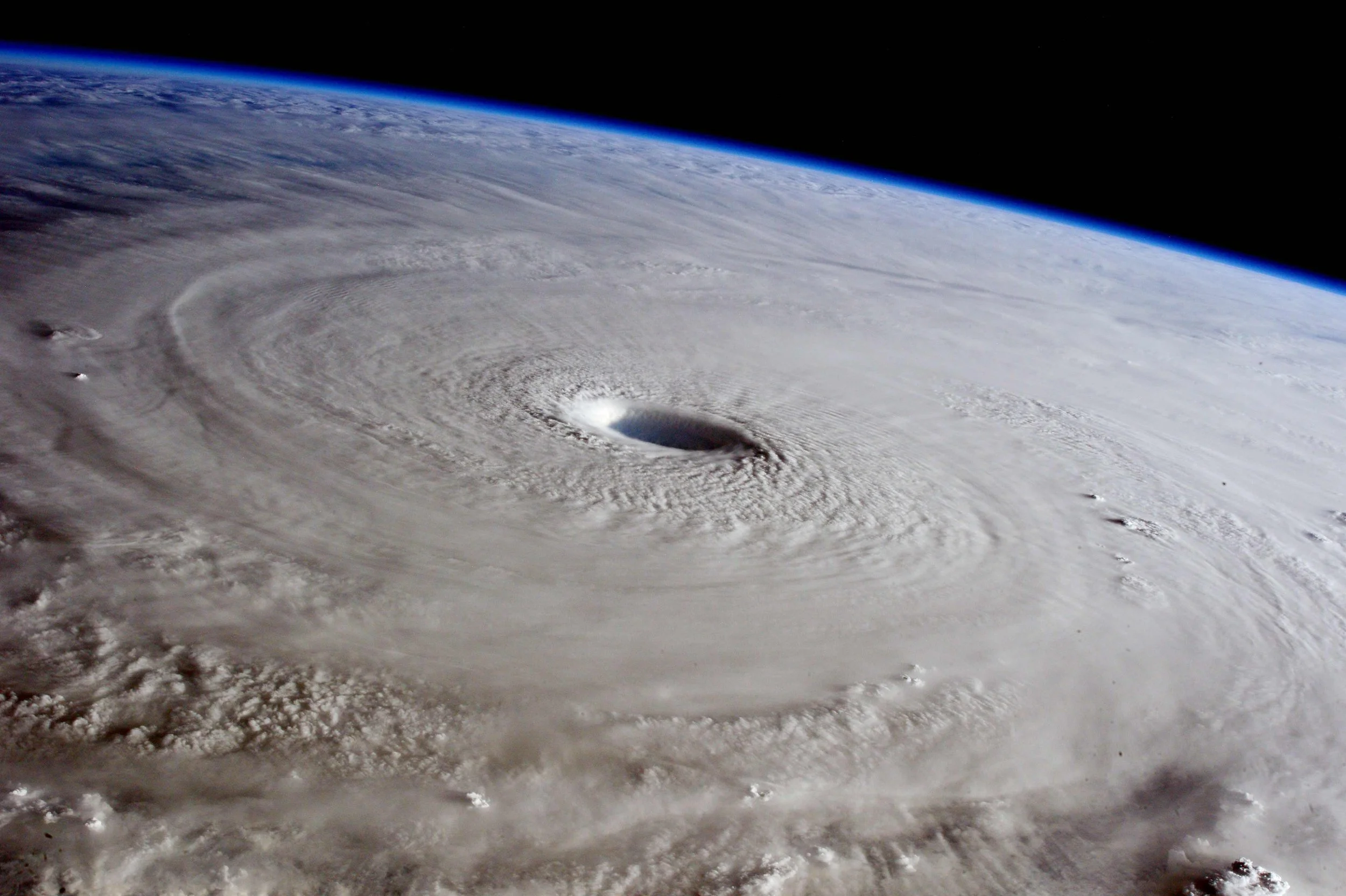
A typhoon viewed from space