Postmodern Parataxis
If the word and were given its own prose style, this style would be known as parataxis. The most famous examples of this style can be found in the Pentateuch, and, in that most preeminent stylist of modern literature, Gertrude Stein (Earnest Hemingway stole Stein’s paratactic style and the world called it his own). Here clauses are strung together on a thread of ands, forming a continuous present without logical sequence, leaving it up to the reader to divine the occult causal chain, as in this example from Stein’s Tender Buttons (1914).
“A seal and matches and a swan and ivy and a suit.”
But parataxis expands beyond mere prose style. Aside from the sheer never-ending intensity of modern life, one might not find a more perfect example of true parataxis than the random commercials that interrupt your streaming media; or, should you find yourself in a hotel with one of those old-style cable televisions, one can practice parataxis by channel surfing: going from one random image to the next, where every skip to the next channel constitutes the and. I don’t really use the term postmodern very often, or at all (because clearly modernity has not ended) but were I too sum up postmodernism as an aesthetic phenomena I would say that it is made entirely out of ands, random images on an infinitive series. No wonder Frederic Jameson called this the fragmentation of the psyche—only, I would revise that to the psyche made continuous; or the stream of psyche.
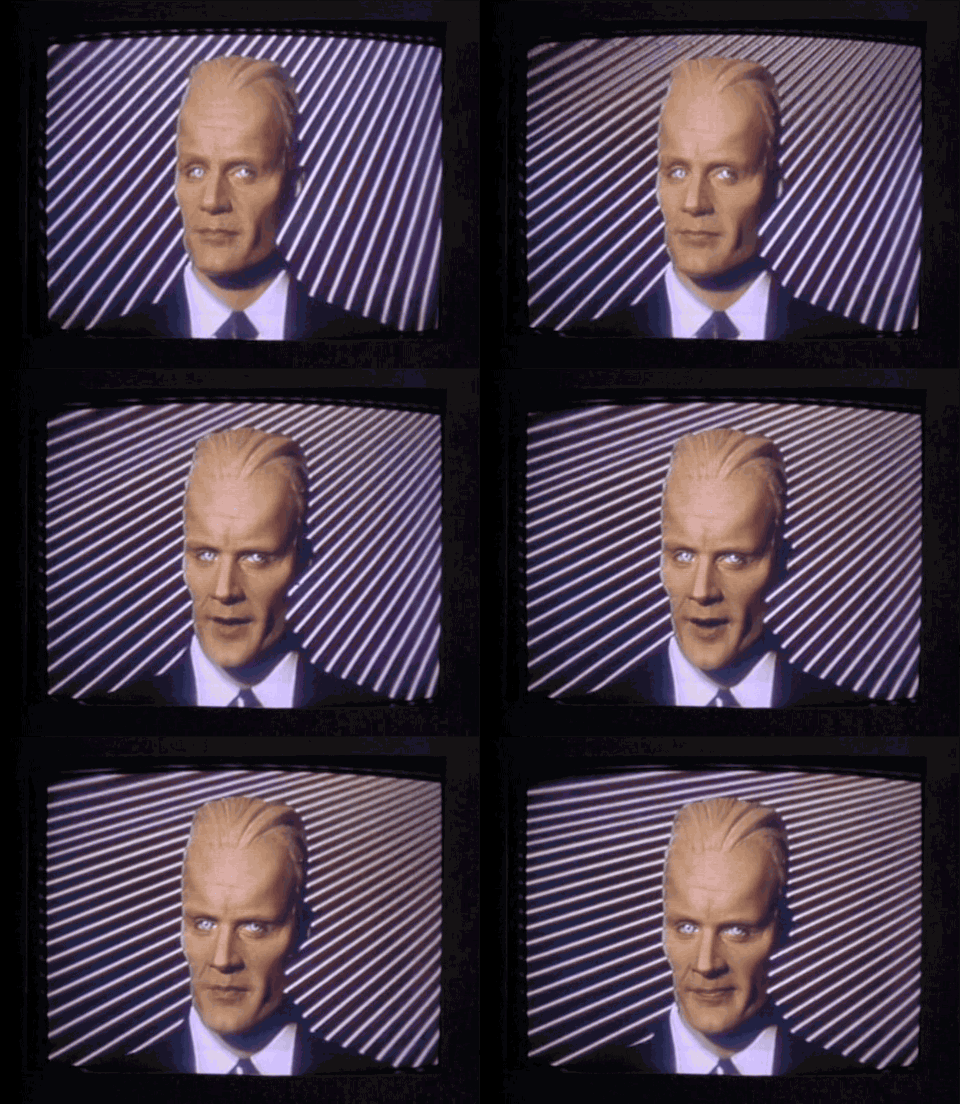
Max Headroom, 1985